
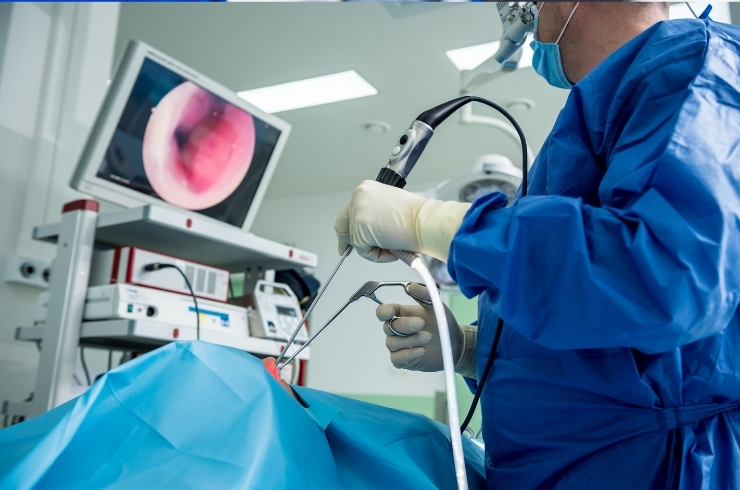
Ear, nose, and throat endoscopy involves the use of specialized instruments with a small camera and light to examine internal structures of the ears, nasal passages, sinuses, and throat. At Sarang, ENT endoscopy services support the detailed evaluation of symptoms such as nasal blockage, recurring sinus problems, throat discomfort, voice changes, and selected ear-related concerns. These examinations help the specialist visualize affected areas, identify possible abnormalities, and determine appropriate treatment based on individual clinical findings.
Nasal Endoscopy: Examination of the nasal passages and internal nasal structures to assess nasal blockage, allergies, nasal polyps, bleeding, and sinus-related concerns.
Diagnostic Nasopharyngoscopy: Examination of the nasal cavity, nasopharynx, and surrounding structures to evaluate suspected abnormalities, persistent nasal symptoms, and related concerns.
Throat Endoscopy: Visualization of the throat and related structures to assess persistent throat irritation, swallowing difficulties, and other throat-related symptoms.
Laryngeal Endoscopy: Examination of the larynx and vocal cords to evaluate hoarseness, voice changes, and other voice-related concerns.
Ear Endoscopic Examination: Detailed visualization of the ear canal and eardrum to assess ear infections, blockage, discharge, and other ear-related conditions.
Endoscopic Evaluation and Follow-up: Repeat examinations when clinically required to monitor identified conditions and assess response to treatment.
Provides a detailed view of internal ENT structures.
Helps identify possible causes of persistent ENT symptoms.
Supports the evaluation of nasal blockage and sinus conditions.
Helps assess throat, voice, and swallowing-related concerns.
Enables examination of the ear canal and eardrum.
Supports accurate clinical assessment and treatment planning.
Helps monitor selected ENT conditions during follow-up.